Strong public schools require stable, predictable funding. Florida’s students deserve investments that keep classrooms staffed, campuses safe, and services intact — not short-term fixes or political experiments that weaken neighborhood schools.
Florida K–12 Funding: What You Should Know
Florida funds public schools through the Florida Education Finance Program (FEFP) — a formula combining state dollars, local property taxes, and federal funds to support K-12 education statewide. THIS formula determines how much each district receives to educate students fairly.
Key Facts
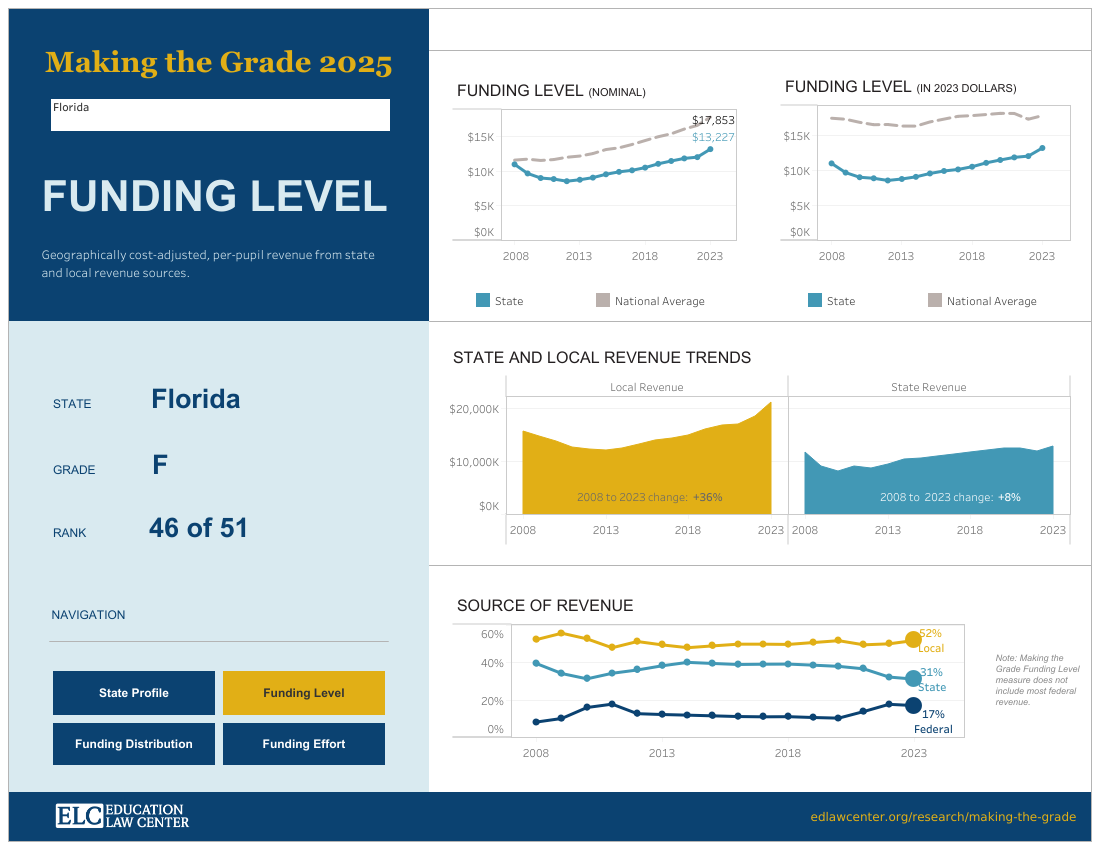
Florida’s per-student funding remains below the national average, with schools receiving roughly $13,900 per student, which is significantly less than the U.S. average.
Over the past decade and more, inflation-adjusted funding per pupil has declined, with state and local combined funds dropping by hundreds of dollars per student compared to pre-recession levels.
Recent state budget plans show modest increases in education funding — but these increases struggle to keep pace with inflation and growing needs in classrooms.
Federal funding for Florida schools is also an area of concern, and occasional delays or holds at the federal level can ripple into local classrooms and programs. Potential cuts to federal funding will have devastating impacts on our most vulnerable students.
Why It Matters
When funding doesn’t keep up with costs, even small gaps can affect:
Teacher recruitment and retention
Classroom resources and supplemental programs
Support services like counseling, arts, and after-school programs
Facility maintenance and safety upgrades
That’s why advocating for equitable, sufficient, and transparent K–12 funding is central to strong public schools in Florida.