“Whatever can go wrong with this system has gone wrong.”
Florida Auditor General
K-12 Voucher Programs
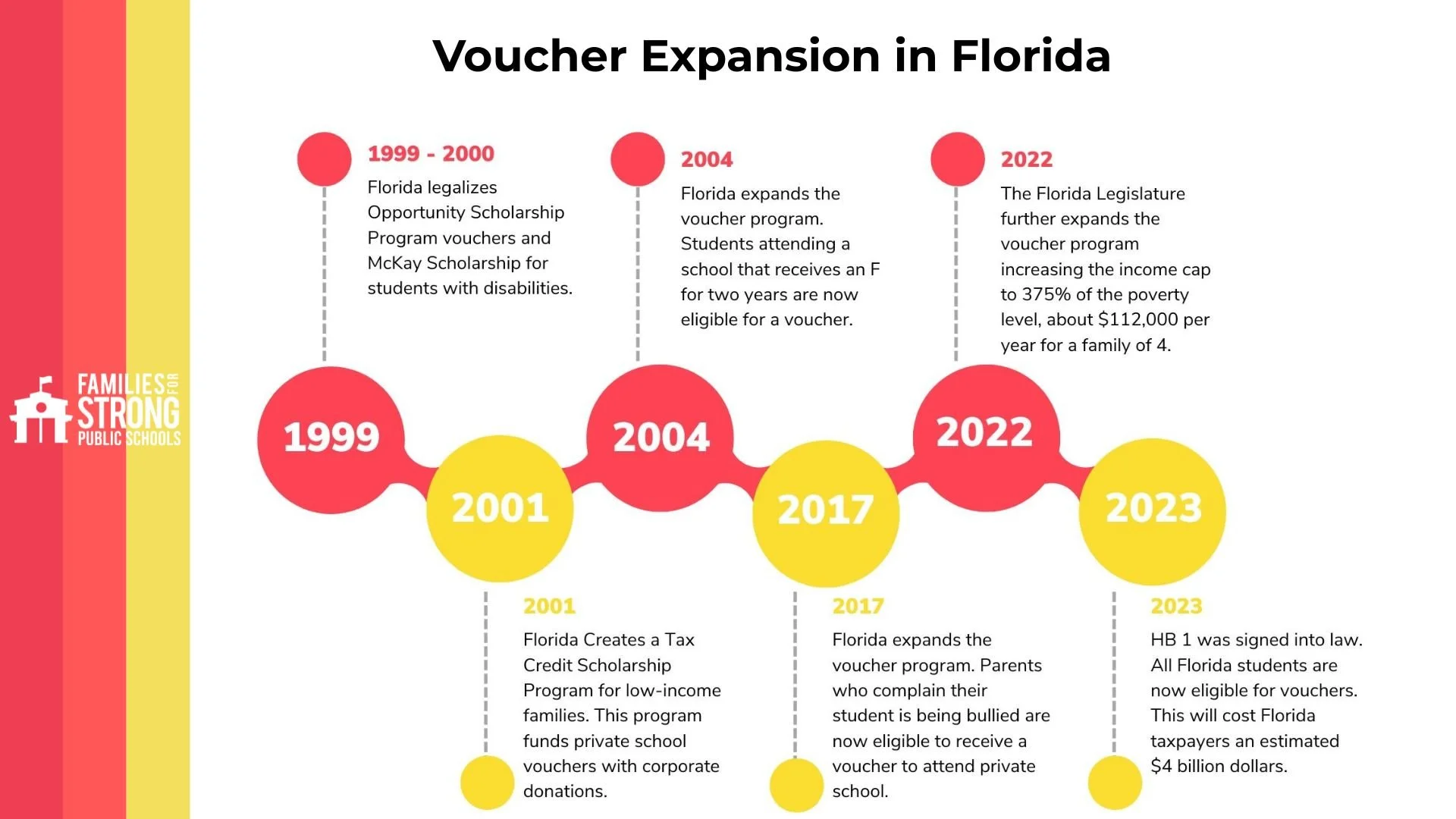
Florida’s school voucher system, often called scholarship programs, redirects public education dollars into private schools, education savings accounts (ESAs), and individualized learning supports. These programs have expanded rapidly and now reach hundreds of thousands of students each year, funding choices outside of neighborhood public schools.
State Programs
Florida offers several state-funded scholarship options:
Family Empowerment Scholarship (FES-EO) — A voucher that allows any Florida K–12 student to use public funds for private school tuition or approved educational services. Income limits were eliminated in 2023, making it universal.
Florida Tax Credit Scholarship (FTC) — Funded through corporate tax credits, this program provides scholarships for private school tuition or related costs.
Unique Abilities (ESA) — For students with diagnosed needs, funds go into an education savings account that can pay for therapies, tutoring, curriculum, private tuition, and other services.
Personalized Education Program (PEP) — An ESA option that lets families direct public funds for homeschooling, tutoring, instructional materials, and other approved uses.
Additional programs (such as reading and transportation scholarships) further expand choices for families.
How They Work
These scholarships effectively redirect taxpayer dollars away from the public school system, on average, about $8,000 per student, toward private schooling, homeschooling supports, or allowable services in ESAs. For every student enrolled in a voucher program, that funding is no longer available to the public school district they would otherwise attend.
Why It Matters
Voucher funding is drawn from the same state education budget that supports public schools. As these programs expand, they can reduce resources for neighborhood schools without the same transparency, accountability, or minimum service requirements that traditional public education must meet. Recent audits have also raised serious concerns about oversight, fiscal tracking, and accountability for how voucher dollars are used.