
Sales Tax & Millage Referendums
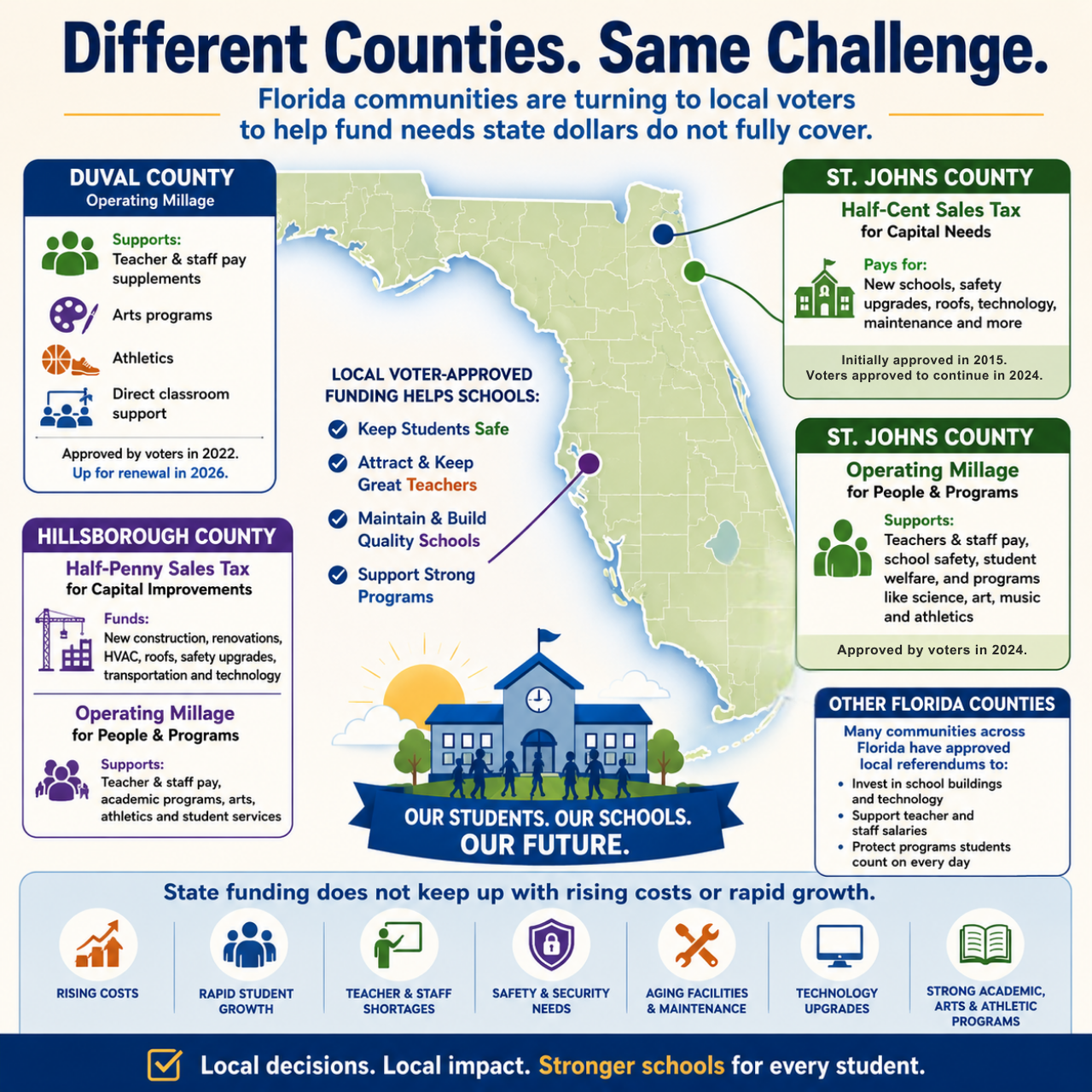
Florida public schools are paid for with a mix of state and local money.
But state funding does not always cover the full cost of running schools, paying teachers and staff, keeping buildings safe, replacing old equipment, or building new schools.
Because of this, Florida school districts may ask local voters to approve extra funding. Over 60% of Florida students live in a school district that receives additional funds from local referendums.
The two types of school funding referendums are:
Sales tax referendums
Millage, or property tax, referendums
They are not the same, and they fund different things.
Click HERE for local referendum support
Click HERE for local referendum support
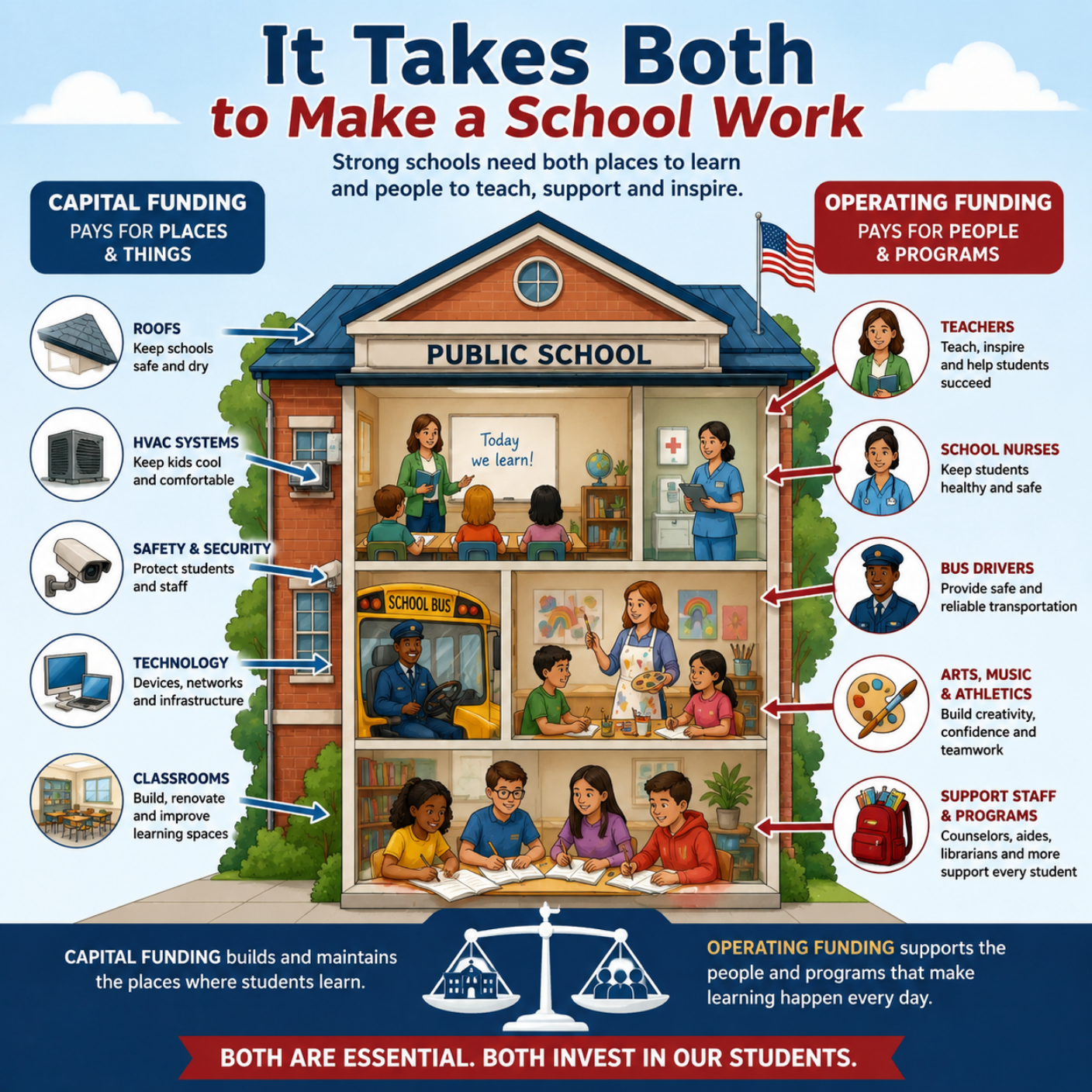
What is the difference between how funds from a sales tax and a millage referendum can be used?
Think of school funding as having two buckets.
Bucket 1: CAPITAL (Sales Tax)
Capital money pays for the school buildings and things that last for many years.
Bucket 2: OPERATING (Millage)
Operating money pays for the people, programs, and everyday costs of running schools.

QUESTIONS VOTERS SHOULD ASK
Before voting on any school referendum, ask:
What kind of tax is this?
Is it new, an increase, or a renewal?
How much will it cost?
How long will it last?
What can the money be used for?
What cannot the money be used for?
How much money will it raise?
What will the district do with the money?
How will the public know how the money is spent?
Is there a citizen oversight committee or regular public report?
What happens if the referendum does not pass?
How does this district compare with nearby districts?
Why is local funding needed in addition to state funding?